
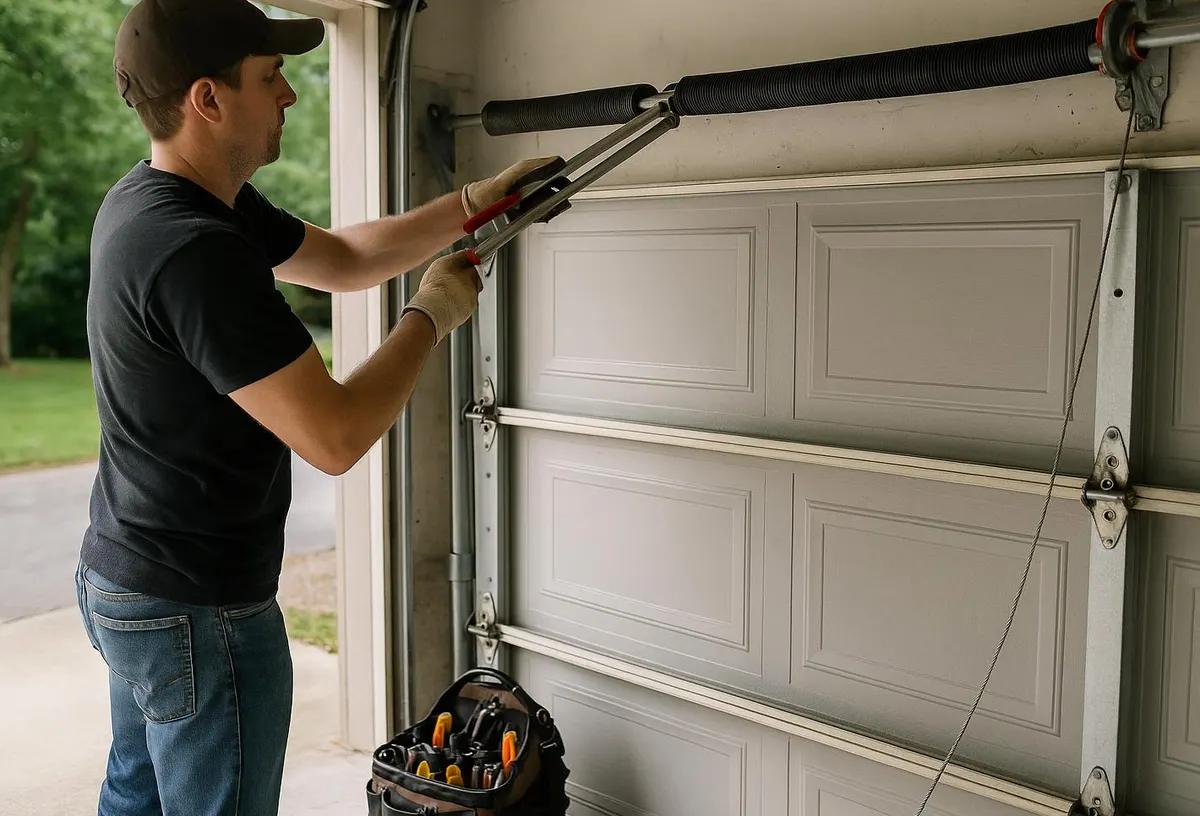
If you only remember one thing, remember this: an insulated steel door is the safest default for most homes in this part of Maryland, because it handles humidity, hard freezes, and wind-driven rain better than anything else at a similar price. The exceptions are real, though. A homeowner restoring an older farmhouse may want the look of real wood badly enough to accept the upkeep. A detached garage that never sees a car in winter doesn't need the same insulation a main garage does. And a modern build with big glass panels may call for aluminum regardless of climate. The right choice depends on the house, not just the weather, but the weather should be part of every decision.
Steel Doors
Steel is the workhorse. Most come with a foam or polyurethane core, which matters here because it keeps conditioned garages more stable through both humid summer heat and sub-freezing nights. Steel doesn't rot, won't swell from moisture, and holds up well against the wind gusts that come with coastal storms moving up from the Bay.
The trade-off is surface damage. A scratch or chip in the paint, left alone through a wet season, can rust from the inside out. Hail and errant baseballs will dent steel more easily than you'd think, especially on lighter-gauge panels. Budget steel doors also tend to have thinner weatherstripping at the bottom, which matters when ice forms under the door edge in January.
Wood Doors
Nothing matches real wood for curb appeal on older or custom homes, and it's still common to see original wood doors on older properties around Southern Maryland. Stained or painted well, it's the warmest-looking option by far.
But wood and this climate don't always get along. Humid summers push moisture into the grain, which leads to swelling, sticking, and eventually warping if the finish isn't maintained. Heavy rain exposure accelerates rot at the bottom panel, the part closest to standing water and snowmelt. Expect to refinish every few years, and budget for a door that's heavier overall, which puts more strain on springs and openers than steel does.
Aluminum Doors
Aluminum is light, won't rust, and is the standard choice for the large glass-panel doors that show up on newer contemporary builds. Because it's rust-proof, it tolerates heavy rain and humidity without the long-term corrosion risk steel can have if its finish is damaged.
The downside is durability. Aluminum dents easily, sometimes from nothing more than a bike leaned against it. It's also a poor insulator unless it's built with a foam core, and on its own it tends to "oil-can," developing visible wavy ripples in the panels as temperatures swing between a humid afternoon and a cold night. For a main garage that's used daily through winter, aluminum alone isn't usually the best insulating choice.
Fiberglass Doors
Fiberglass is often sold as the low-maintenance wood look-alike, and it earns that reputation. It resists denting better than aluminum, won't rot the way wood will in a wet season, and holds up well against humidity since it doesn't absorb moisture the way wood does.
Its weak point shows up in hard winters. In sustained deep-freeze conditions, fiberglass can become brittle and is more prone to cracking on impact than steel. Because the material itself isn't very rigid, most fiberglass doors are reinforced with a steel or aluminum frame underneath, which adds cost. UV exposure over years can also fade color if the finish isn't a quality one.
Composite Doors
Composite doors usually pair a steel frame or skin with a wood-grain composite overlay, aiming to get the look of wood with the durability of steel. For this area, that combination makes sense: the composite skin resists moisture and won't rot from heavy rain exposure, while the steel core still delivers solid insulation for icy winters.
The trade-offs are cost and repair logistics. Composite doors generally sit at the higher end of the price range, and if one panel is damaged, you're often replacing the whole section rather than sanding and repainting a spot like you could with real wood. Style and color options are also more limited than true wood.
Side-by-Side on the Factors That Matter Most Here
- Rot/rust resistance: Fiberglass and composite are best; steel is good if the finish is intact; wood is the most vulnerable.
- Insulation: Insulated steel and insulated composite lead; wood varies by thickness; aluminum is weakest unless foam-backed.
- Dent/impact resistance: Steel and composite hold up well; fiberglass is decent; aluminum dents easiest.
- Cold-weather durability: Steel and composite perform reliably in hard freezes; fiberglass can become brittle; wood can crack if it dries out unevenly.
- Maintenance: Wood needs the most upkeep (refinishing every few years); fiberglass and steel need the least; composite is low-maintenance but costly to repair.
- Typical cost range: As a national range, steel tends to run lowest, aluminum and fiberglass in the middle, and wood and composite at the higher end, depending on insulation and design.
What We'd Recommend for Most Homes Here
For a typical attached garage in this area, insulated steel is still the most practical all-around choice, given the swing between humid summers and icy winters and the occasional coastal storm. If you want a wood look without the maintenance burden, fiberglass or composite is worth the extra cost, especially on a door that gets direct rain exposure. Save real wood for homeowners who genuinely want to maintain it, often on older homes where matching the original architecture matters more than long-term upkeep. Aluminum makes the most sense on detached garages or modern builds with large glass sections, where insulation isn't the top priority.
When to Call Brandywine Garage Door
If you're weighing materials because your current door is showing rust at the bottom panel, sagging from moisture damage, or simply past its service life, that's a good time to call us before the first hard freeze of the season rather than after. We handle Garage Door Installation and can walk through which material actually fits your garage's exposure, whether it faces prevailing rain, gets full sun, or sits in a spot prone to ice buildup near the threshold. We also offer Garage Door Maintenance for homeowners who want to extend the life of an existing wood or steel door through another winter rather than replace it outright, checking seals, hardware, and balance before cold weather sets in.
If you're in Brandywine, Clinton, Waldorf, Upper Marlboro, Fort Washington, Accokeek, La Plata, or Cheltenham and you're not sure whether your door needs a repair or a replacement, give Brandywine Garage Door a call. We'll take a look, give you a straight answer, and show up when we say we will.